



Frank Eilers | Personal Growth & Professional Insights Frank Eilers | Personal Growth & Professional Insights Frank Eilers | Personal Growth & Professional Insights Frank Eilers | Personal Growth & Professional Insights
  • The Growth Journey
    • Talent & Trade Observatory
    • Data-Driven Analysis
    • Business Strategy
    • International Markets
    • Strategic Analysis
    • Foundational Library
  • Despertando al Gigante
  • Between the Lines
  • About FkEilers
    • About Frank Eilers
  • Contact
  • English
    • Spanish
Frank Eilers | Personal Growth & Professional Insights Frank Eilers | Personal Growth & Professional Insights
  • The Growth Journey
    • Talent & Trade Observatory
    • Data-Driven Analysis
    • Business Strategy
    • International Markets
    • Strategic Analysis
    • Foundational Library
  • Despertando al Gigante
  • Between the Lines
  • About FkEilers
    • About Frank Eilers
  • Contact
  • English
    • Spanish
Nov 14
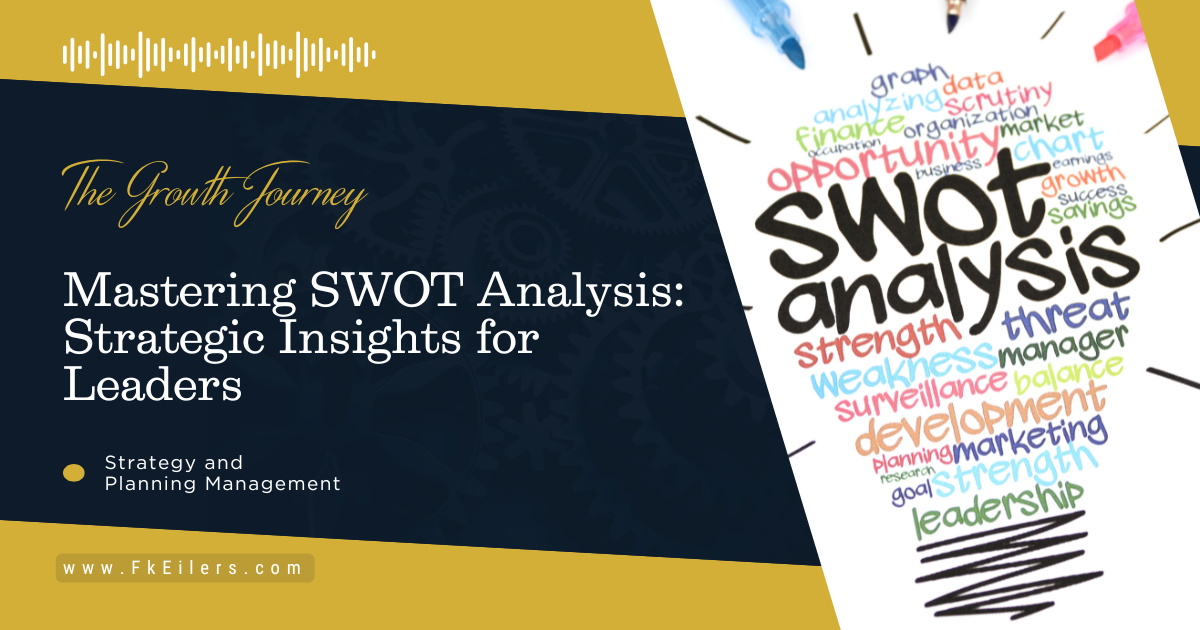
An image of a professional team analyzing a whiteboard with SWOT analysis charts, highlighting strengths, weaknesses, opportunities, and threats for strategic planning.

Mastering SWOT Analysis: Strategic Insights for Leaders

  • Frank Eilers
  • Management and Leadership, Foundational Library, Strategic Planning, The Growth Journey

Introduction
In a competitive and ever-changing business environment, strategic tools are essential to maintaining an edge. SWOT analysis (Strengths, Weaknesses, Opportunities, and Threats) is one of the most versatile and effective methodologies to evaluate an organization’s current state and plan its future with precision.

This article explores how to conduct a SWOT analysis effectively, its importance in strategic planning, and practical examples illustrating its application.

What Is SWOT Analysis and Why Is It Essential?

SWOT analysis is a strategic tool that helps identify:

  • Strengths: Internal advantages that differentiate the organization.
  • Weaknesses: Internal factors limiting performance.
  • Opportunities: External elements that can benefit the organization.
  • Threats: External factors posing risks.

Its relevance lies in providing a comprehensive view to guide informed decisions, align objectives, and anticipate challenges.

How to Conduct a SWOT Analysis Step by Step

  1. Define the Objective:
    Start by establishing the purpose of the analysis: Is it for a new strategy, project, or overall business evaluation?
  2. Gather Data:
    Use tools like surveys, market research, and internal audits to collect key information.
  3. Identify the Four Elements:
    • Strengths: What does your organization do well? What unique resources does it have?
    • Weaknesses: What needs improvement? Where are inefficiencies present?
    • Opportunities: What market trends can you leverage?
    • Threats: What external changes might impact performance?
  4. Prioritize:
    Not all inputs carry the same weight. Focus on the most relevant factors for your objective.
  5. Design an Action Plan:
    Combine elements to create effective strategies, such as:

    • Leveraging strengths to capitalize on opportunities.
    • Minimizing weaknesses to mitigate threats.

Practical Example of a SWOT Analysis

A tech startup might conduct the following analysis:

  • Strengths: Innovative and agile development team.
  • Weaknesses: Limited marketing budget.
  • Opportunities: Increasing demand for customized software solutions.
  • Threats: Competition from larger, resource-rich tech companies.

Action Plan:
Utilize the agile team to develop unique products for a niche market while implementing cost-effective digital marketing strategies.

Applying SWOT Analysis in Strategic Planning

SWOT analysis is most effective when integrated into broader strategic processes, such as:

  • Setting Priorities: Allocating resources to areas with the highest impact.
  • Anticipating Risks: Designing contingency plans for potential threats.
  • Aligning Goals: Ensuring departmental objectives align with the organization’s vision.

Conclusion

SWOT analysis is more than a simple matrix; it’s a strategic tool that provides clarity and direction during critical moments. Leaders who master it can turn information into action, guiding their teams toward informed decisions and sustainable success.


  • Facebook
  • Twitter
  • Reddit
  • Pinterest
  • Google+
  • LinkedIn
  • E-Mail

About The Author

Business & Data Analyst focused on international markets, strategy and market intelligence. Founder of FkEilers and creator of The Growth Journey, where business, data, strategy and international context connect through applied judgment.

Related Posts

Comments are closed.

Categories

  • Between the Lines
  • Business Strategy
  • Change Management
  • Customer Service
  • Data-Driven Analysis
  • Data-Driven Analysis
  • Despertando al Gigante
  • Foundational Library
  • Goal Achievement
  • International Markets
  • Leadership Strategies
  • Management and Leadership
  • Marketing
  • Personal Development
  • Personal Growth
  • Self Awareness
  • Strategic Analysis
  • Strategic Planning
  • Success and Life Purpose
  • Success Stories from Your Network
  • Team Management
  • The Growth Journey

Tags

* customer-retention Artificial Intelligence Automation BiblicalInspiration Branding business strategy CES ChangeManagement ChangeStrategies Chatbots customer-service Customer Experience Customer Journey Customer Lifetime Value Customer Loyalty Customer Success Customer Support Customer Trust decision making DespertandoAlGigante Digital Marketing EffectiveLeadership Experiencia del Cliente FaithAndPurpose Leadership LeadershipSkills LeadershipStrategies LifePurpose Marketing Marketing Analytics Marketing Strategy Motivation NPS OrganizationalTransformation PersonalGrowth PurposeDrivenLife SelfDiscovery SEO Service Culture Servicio al Cliente SpiritualGrowth Strategic Marketing Success TransformationalLeadership Value Proposition
© 2026 Frank Eilers. All rights reserved. FkEilers | Privacy Policy | Terms and Conditions